EMDR vs CBT for Trauma: The Essential Guide to Which Therapy Is Right for You
If you’re trying to make sense of your options for trauma treatment, you have almost certainly come across the EMDR vs CBT question. Both are recommended, evidence-based therapies for trauma and post-traumatic stress disorder (PTSD), and both are offered here at MindKey Therapy. Yet the two approaches work in quite different ways, and understanding those differences can make it much easier to decide which route feels right for you.
This article walks through what each therapy involves, how EMDR vs CBT compare in terms of evidence, structure and experience, and how you might begin to work out which is the better fit for your own history and goals. As a BABCP Accredited Cognitive Behavioural Therapist and EMDR Europe trained practitioner with over 15 years of clinical experience, I use both approaches regularly, often adapting them to each person’s individual needs.
Table of Contents
- Understanding Trauma and Why Treatment Matters
- What Is CBT (and Trauma-Focused CBT)?
- What Is EMDR?
- EMDR vs CBT: Where the Two Approaches Overlap
- EMDR vs CBT: The Key Differences
- EMDR vs CBT: What Does the Evidence Say?
- Which Therapy Might Suit You Best?
- Common Myths About EMDR and CBT
- Can EMDR and CBT Be Used Together?
- What to Expect From Sessions at MindKey Therapy
- Frequently Asked Questions
- Getting Started
Understanding Trauma and Why Treatment Matters

Trauma can develop after almost any experience that overwhelms our normal ability to cope: childhood abuse or neglect, bullying, domestic abuse, sexual assault, a serious accident, a threat to life, war, or the sudden loss of someone close to us. Some people process these events over time and, in some cases, even find a different perspective on life as a result. Others develop lasting difficulties, including flashbacks, nightmares, avoidance, emotional numbness, hypervigilance, anxiety or depression. The NHS website has further information on recognising the signs and symptoms of PTSD.
When these symptoms persist, they are often signs of PTSD or complex trauma, and psychological treatment can make a significant difference. This is where the EMDR vs CBT conversation usually begins, because both are the therapies most consistently recommended by UK clinical guidelines for trauma-related difficulties. Understanding a little about how each one works is the best starting point before deciding between them.
It’s also worth saying that seeking help is not a sign of weakness, and there is no “right” amount of time that needs to pass before reaching out. Some people come forward soon after a distressing event, while others carry difficulties for years, sometimes decades, before deciding the impact on their daily life, relationships or work has become too much to manage alone. Whenever you decide to seek support, understanding the treatment options available to you, including how EMDR vs CBT compare, can make that step feel less daunting.
What Is CBT (and Trauma-Focused CBT)?
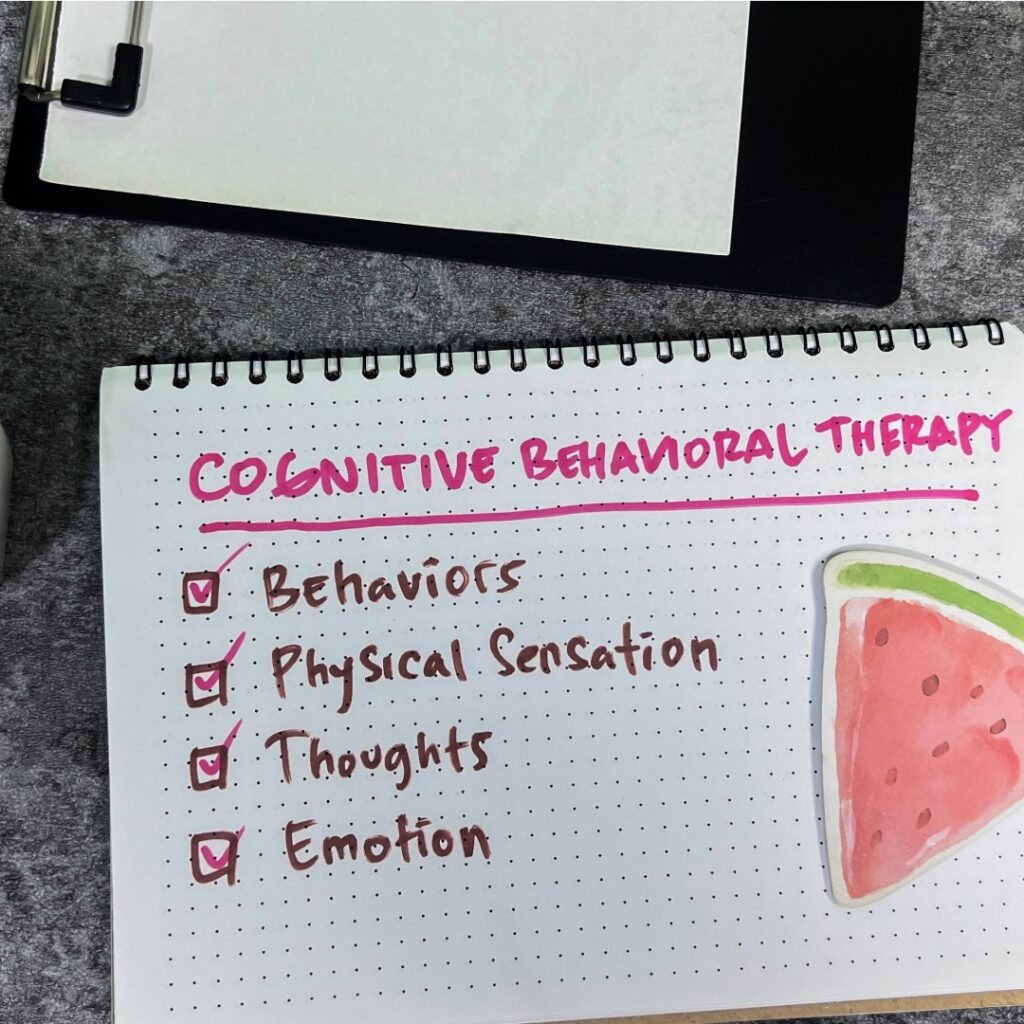
Cognitive Behavioural Therapy, or CBT, is a structured, talking-based therapy that explores the links between our thoughts, feelings, physical sensations and behaviours. In general CBT, the therapist and client work together to identify unhelpful thinking patterns and gradually test and adjust them, alongside practical strategies for managing anxiety, low mood or stress. In the UK, CBT therapists are typically accredited through the British Association for Behavioural and Cognitive Psychotherapies (BABCP), which sets clinical and ethical standards for practice.
Trauma-Focused CBT builds on this foundation specifically for PTSD and trauma. It typically involves talking through the traumatic memory in a structured, paced way, identifying “stuck points” in how the event is understood, and working through avoidance behaviours that may be keeping symptoms alive. Sessions often include psychoeducation about trauma responses, gradual and carefully managed exposure to trauma-related memories or reminders, and cognitive work to help update unhelpful beliefs such as “it was my fault” or “the world is not safe.”
CBT is an active, collaborative therapy. You will usually be given things to reflect on or practise between sessions, and progress is often tracked using structured measures. Many people find the logical, skills-based nature of CBT appealing, particularly if they like having a clear framework to work within.
CBT also has a long track record beyond trauma specifically. It is widely used for anxiety, depression, stress and a range of other psychological difficulties, which means the skills learned during trauma-focused work, such as noticing unhelpful thought patterns or managing physical symptoms of anxiety, often carry over into everyday life long after therapy ends. For people whose trauma sits alongside ongoing anxiety or low mood, this dual benefit can be a genuine advantage when weighing up EMDR vs CBT.
What Is EMDR?
EMDR, or Eye Movement Desensitisation and Reprocessing, takes a different route to the same goal. Developed specifically for trauma, EMDR uses bilateral stimulation, usually guided eye movements, alongside taps or tones, while you briefly focus on a distressing memory. This process appears to help the brain “reprocess” traumatic memories so that they become less distressing and less intrusive over time.
EMDR follows an eight-phase structured protocol, which includes taking a full history, preparation and building a sense of safety, identifying target memories, processing those memories through sets of bilateral stimulation, and installing more adaptive, positive beliefs in place of distressing ones. Unlike traditional talking therapy, EMDR does not require you to describe the traumatic event in detail. Many people find this a real relief, as it can feel far less exposing than repeatedly narrating what happened.
EMDR is EMDR Europe accredited training, meaning practitioners follow a recognised, standardised protocol. It’s often described as working more directly with the way memories are stored in the brain, rather than primarily with conscious thoughts and beliefs.
EMDR vs CBT: Where the Two Approaches Overlap
Before looking at how EMDR vs CBT differ, it’s worth noting how much common ground they share. Both are structured, time-limited therapies rather than open-ended talking therapy. Both are recommended by the National Institute for Health and Care Excellence (NICE) for PTSD in adults, and both are delivered within NHS Talking Therapies services across the UK, as well as privately.
Both therapies also require the memory or its associated distress to be addressed directly rather than avoided, since avoidance is one of the key factors that keeps trauma symptoms going. Both aim to reduce the intensity of flashbacks, nightmares and intrusive thoughts, ease hypervigilance and emotional numbing, and help you feel more able to engage with everyday life. In both approaches, a strong, trusting therapeutic relationship and a careful pace matter enormously, particularly for anyone with complex trauma.
EMDR vs CBT: The Key Differences

The clearest distinction in the EMDR vs CBT comparison is how each therapy engages with the traumatic memory. Trauma-Focused CBT tends to involve more verbal processing: talking through what happened, examining the meaning you have attached to it, and doing structured cognitive work between sessions. EMDR, by contrast, relies far less on verbal narrative and more on the reprocessing that happens during bilateral stimulation, with far less “homework” required outside of sessions.
Session length and pacing can also differ. NHS data suggests that EMDR treatment is often shorter in overall duration than trauma-focused CBT, which can be an important factor if you are hoping to see change relatively quickly. That said, everyone’s history is different, and the number of sessions needed depends far more on the complexity of the trauma than on which therapy is chosen.
Another difference lies in how much conscious insight is involved. CBT places more weight on identifying and challenging unhelpful beliefs through discussion, while EMDR allows the brain’s own information-processing system to do much of that work, often with new, more adaptive beliefs surfacing naturally during reprocessing. Neither approach is “better” in a general sense; the EMDR vs CBT decision usually comes down to what feels manageable and appropriate for your specific experience and preferences.
EMDR vs CBT: What Does the Evidence Say?
Both therapies have a strong evidence base for PTSD. NICE guidance recommends trauma-focused CBT and EMDR as first-line psychological treatments for adults with PTSD, reflecting a substantial body of research supporting both approaches. Within NHS Talking Therapies services in England, outcome data has shown broadly comparable recovery rates for trauma-focused CBT and EMDR, with no statistically significant difference in overall symptom improvement between the two.
Where the evidence does point to a practical difference is treatment length. Several studies and NHS data sets suggest that EMDR often achieves comparable results in fewer sessions, placing a somewhat lower burden on client time. This does not mean EMDR is automatically the “faster” choice for everyone, since factors such as the number of traumatic events, the presence of complex trauma, and other coexisting difficulties like depression or anxiety all affect how long treatment might take, regardless of which model is used.
It’s also worth being cautious about drawing too firm a conclusion from a single piece of research. Both therapies are well-established, ethically regulated, and backed by decades of clinical study, and the “right” choice in the EMDR vs CBT debate is ultimately a personal one, best made in conversation with a qualified, accredited therapist who can assess your specific presentation.
Which Therapy Might Suit You Best?

There is no single answer to the EMDR vs CBT question, but a few reflections may help guide your thinking. If you tend to find comfort in structure, homework and a logical, step-by-step framework, and you feel able to talk through what happened in some detail, trauma-focused CBT might feel like a natural fit. If the idea of narrating your trauma in depth feels overwhelming, or you would prefer a therapy that works somewhat “beneath” conscious language, EMDR may feel more accessible.
Some people are drawn to EMDR because they’ve heard it can work more quickly for a single distressing event, such as a road traffic accident or an assault. Others prefer CBT because they want practical coping strategies for anxiety or low mood alongside trauma work, particularly where difficulties extend beyond a single memory into wider patterns of thinking and behaviour, as can happen with complex trauma.
Ultimately, an initial assessment is the best way to work out which of the two, or which combination, is right for your circumstances. During an assessment at MindKey Therapy, we will talk through your history, current symptoms and what has and hasn’t helped before, so that any recommendation is genuinely tailored to you rather than a generic default.
It can also help to think practically about your own life circumstances. If you are managing work, caring responsibilities or other demands, the potential for a shorter overall course of treatment with EMDR might be appealing. If you value having concrete tools and strategies to take away and use independently, even after therapy ends, the structured homework and skills-focus of CBT might sit better with how you like to work. Neither preference is more valid than the other; both are useful, personal factors in the EMDR vs CBT decision.
Common Myths About EMDR and CBT
A few misconceptions tend to come up whenever people research EMDR vs CBT, and it’s worth addressing them directly. One common myth is that EMDR is somehow less “scientific” than CBT because it involves eye movements rather than conversation. In reality, EMDR follows a rigorous, standardised eight-phase protocol, has been studied extensively, and is recommended by NICE alongside trauma-focused CBT precisely because of its evidence base, not in spite of it.
Another myth is that CBT is a purely intellectual exercise that ignores emotion. While CBT does involve examining thoughts and beliefs, trauma-focused CBT is very much an emotional process too, carefully paced to help you process feelings connected to the trauma rather than simply “thinking differently” about it. Similarly, some assume EMDR requires no effort or engagement from the client, when in fact active participation, trust in the process, and a willingness to sit with some discomfort are important in both approaches.
Finally, people sometimes believe that once you start one therapy, you’re locked into it. This isn’t the case. If trauma-focused CBT or EMDR doesn’t feel like the right fit after an initial period, this can be discussed openly, and the approach can be adjusted. The EMDR vs CBT decision is rarely final or irreversible, and a good therapist will always prioritise what is actually helping you over rigid adherence to a single model.
Can EMDR and CBT Be Used Together?
Yes. In practice, EMDR and CBT are not always an either/or choice. Many therapists, including here at MindKey Therapy, draw on both approaches depending on how treatment unfolds. For example, some CBT-based coping strategies for managing anxiety or emotional regulation might be introduced early on to build stability, with EMDR then used to process specific traumatic memories once you feel more prepared.
This integrated way of working reflects a broader shift in trauma therapy towards flexibility rather than rigid adherence to a single model. Rather than framing it strictly as EMDR vs CBT, it can be more useful to think of both as tools within a wider toolkit, with the sequencing and balance shaped around your specific needs, pace and preferences.
For some people with more complex or longstanding trauma, Narrative Exposure Therapy may also be a relevant option, particularly following multiple or repeated traumatic events such as prolonged abuse or exposure to conflict. This is another therapy offered at MindKey Therapy and can sometimes be used alongside, or instead of, EMDR and CBT depending on your history.
What to Expect From Sessions at MindKey Therapy
Whichever therapy you choose, or however the two are combined, sessions at MindKey Therapy always begin with time to talk through your history and current difficulties, so that treatment can be planned around you rather than following a one-size-fits-all template. Working compassionately and sensitively, the aim is to help you build skills and coping strategies, develop insight into what you have experienced, and gradually gain more control over distressing memories, thoughts and emotions.
Sessions are available online or in person, and MindKey Therapy serves clients across North Wales, Shropshire, Cheshire and beyond from a base in Wrexham. Each session costs Session lengths are flexible, depending on the therapy., and a 24-hour cancellation policy applies, giving structure and predictability to the process. All work follows BABCP ethical standards, so you can expect a professional, confidential and accountable service throughout. You can find full details on the Services & Fees page.
You do not need a diagnosis to reach out. Many people arrive simply knowing that something from the past is affecting their present, whether that’s low mood, anxiety, difficulty trusting others, or a sense of being stuck. Read more about the approach on the About Me page, or take a look at the FAQ page for answers to common questions about how therapy works in practice. When you feel ready, you can get in touch directly via the Contact page.
Frequently Asked Questions
Is EMDR or CBT better for PTSD?
Neither is universally “better.” In the EMDR vs CBT comparison, NHS outcome data and NICE guidance both point to broadly similar recovery rates, with EMDR sometimes achieving results in fewer sessions. The right choice depends on your history, preferences and how you respond to each approach during assessment and early sessions.
Does EMDR really work, or is it just eye movements?
EMDR is a structured, evidence-based, eight-phase therapy, not simply moving your eyes back and forth. It is recommended by NICE for PTSD and has a substantial and growing body of research supporting its effectiveness for trauma.
Do I have to talk about my trauma in detail with either therapy?
Trauma-focused CBT typically involves more verbal discussion of the traumatic event, while EMDR generally requires far less detailed narration. If talking about what happened feels too difficult right now, this may be a helpful factor when weighing up EMDR vs CBT.
How many sessions will I need?
This varies significantly from person to person, depending on the nature and complexity of the trauma. Single-incident trauma often resolves more quickly than complex or repeated trauma. This will be discussed openly during your assessment.
Can I have therapy online?
Yes, both EMDR and CBT can be delivered effectively online as well as in person, and MindKey Therapy offers both options for clients across North Wales, Shropshire, Cheshire and further afield.
Getting Started
Deciding between EMDR vs CBT does not need to be a decision you make alone or in the abstract. An initial conversation with an accredited, experienced therapist can help clarify which approach, or combination of approaches, is likely to suit your particular history and current difficulties best. What matters most is taking that first step towards support, in whichever form feels right for you. You can also browse further articles on the MindKey Therapy blog.
For further independent information on trauma therapies, the NICE guideline on PTSD, the EMDR Association UK and Mind’s guide to PTSD treatment are all reputable UK resources worth exploring alongside this article.
To get started, or simply to ask a question, contact MindKey Therapy directly. Email [email protected], call 07487 373628, or visit https://www.mindkeytherapy.co.uk to get started.